
Texas public records are government-created documents, filings, databases, and communications maintained by state and local agencies that are generally accessible to the public under the Texas Public Information Act (TPIA), codified in Chapter 552 of the Texas Government Code. The law establishes a presumption that records created or maintained by government bodies in the course of official business are available for public inspection unless a specific statutory exemption applies.
Residents frequently perform a Texas public records search — sometimes called a Texas public records lookup, Texas government records search, or Texas state records search — to locate court filings, property ownership records, criminal history information, business registrations, and other government documents.
Public records in Texas include court filings, criminal records, property ownership documents, business registrations, vital records, licensing records, and government administrative records. These records are distributed across multiple state and county systems rather than a single centralized database.
Understanding which agency maintains each record type is the key to researching public records effectively in Texas.
Quick Answer: Where to Search Texas Public Records
The most important free government databases for researching Texas public records include:
• re:SearchTX (research.txcourts.gov) — statewide court records portal
• Texas Judicial Branch Case Search (search.txcourts.gov) — appellate court cases
• Texas Department of Public Safety Crime Records Service — criminal history records
• Texas Secretary of State SOSDirect (sos.state.tx.us) — business entity filings and UCC records
• Texas Department of Criminal Justice Offender Search (tdcj.texas.gov) — state prison inmate records
• County appraisal district portals — property ownership and tax assessment records
• County clerk official records portals — deeds, liens, and recorded documents
These systems provide access to the majority of publicly searchable government records in Texas.
⚠️ Legal Notice
Texas public records law is governed primarily by the Texas Public Information Act (Texas Government Code Chapter 552). While most government records are open to public inspection, certain categories are exempt from disclosure, including medical records, juvenile records, personal identifying information, and certain law enforcement records.
This guide explains lawful public records research methods and does not constitute legal advice.
Why This Guide Is Reliable
inet-investigation.com publishes research-based guides built on primary government sources, investigative research methods, and public records law. All databases referenced in this guide link to official government websites whenever possible.
For jurisdiction-specific legal questions, consult a licensed Texas attorney or the relevant government agency responsible for the record.
Why Texas Public Records Law Is Distinctive
Texas operates under one of the most structured open records systems in the United States. The Texas Public Information Act (TPIA) establishes that government records belong to the public and must be disclosed unless a specific statutory exemption applies.
Several features distinguish Texas public records law.
Presumption of openness — The TPIA presumes that government records are public unless a law specifically authorizes withholding. Government agencies must justify withholding records by citing a statutory exemption.
Attorney General review process — If an agency believes a record may be exempt from disclosure, it must often request a ruling from the Texas Attorney General’s Open Records Division before withholding the information.
Broad definition of public information — Texas law defines public information broadly to include any information collected, assembled, or maintained by a government body in connection with official business.
Decentralized record systems — Texas maintains statewide portals for some records, but many records remain organized at the county level. Texas has 254 counties, the largest number of counties in any U.S. state, which makes county-level systems essential for comprehensive research.
→ Related guide: What Are Public Records?
→ Related guide: Are Public Records Really Public?
The Legal Framework
| Law | What It Covers |
|---|---|
| Texas Government Code Chapter 552 | Texas Public Information Act — public access to government records |
| Texas Government Code Chapter 551 | Texas Open Meetings Act — public government meetings |
| Texas Local Government Code | Records management and retention |
| Texas Constitution Article I | Constitutional protections supporting transparency |
One commonly cited exemption is Texas Government Code §552.108, which allows law enforcement agencies to withhold certain records relating to ongoing criminal investigations.
Texas agencies may charge reasonable fees for duplication or extensive staff time required to compile records.
Diagram: How Texas Public Records Are Organized
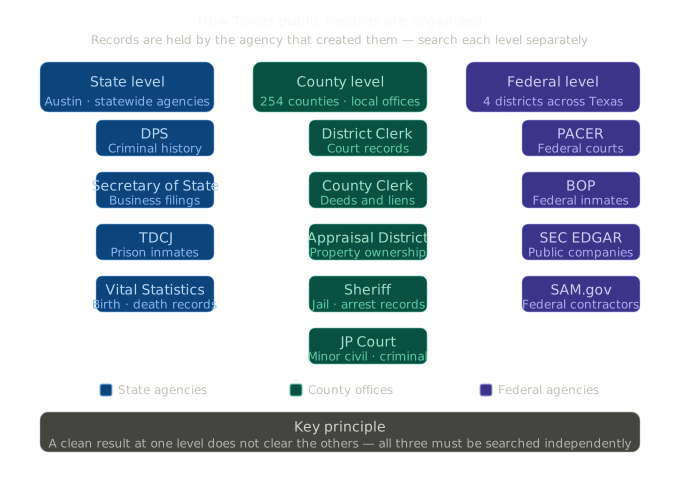
Suggested diagram concept:
STATE LEVEL
 ├─ Texas DPS (criminal history)
 ├─ Secretary of State (business filings)
 ├─ Texas Department of Criminal Justice (inmate records)COUNTY LEVEL
 ├─ District Clerk (court records)
 ├─ County Clerk (deeds and liens)
 ├─ Appraisal District (property ownership)FEDERAL LEVEL
 ├─ PACER (federal court records)
 ├─ Bureau of Prisons (federal inmates)
This visual helps explain how Texas public records are distributed across multiple government levels.
Texas Court Records
Texas court records document civil, criminal, family, probate, and small claims cases filed throughout the state court system.
Texas operates one of the largest judicial systems in the United States. Trial-level cases are primarily handled by district courts and county courts, while justice courts and municipal courts handle local matters such as traffic violations, eviction cases, small claims disputes, and local ordinance violations.
Justice courts (sometimes called Justice of the Peace courts) handle a large number of landlord–tenant and small claims cases. Many justice courts maintain their own local case search systems and may not participate in statewide portals.
re:SearchTX
URL: research.txcourts.gov
Cost: Free registration required
re:SearchTX is the primary statewide portal for searching Texas trial court case records.
Search options include:
• party name
• attorney name
• case number
• filing date
Document availability varies by court.
Texas Judicial Branch Case Search
URL: search.txcourts.gov
This portal provides searchable access to cases from Texas appellate courts including:
• Texas Supreme Court
• Texas Court of Criminal Appeals
• Texas Courts of Appeals
County Court Systems
Texas court records are ultimately maintained by the district clerk or county clerk in the county where the case was filed.
Large counties operate their own court search systems.
Examples include:
• Harris County District Clerk
• Dallas County District Clerk
• Travis County District Clerk
Investigators typically search both statewide portals and the relevant county court systems.
Federal Court Records
Federal cases involving Texas residents appear in PACER (pacer.gov).
Texas has four federal judicial districts:
• Northern District of Texas
• Southern District of Texas
• Eastern District of Texas
• Western District of Texas
Texas Criminal Records
Texas criminal records are maintained by multiple agencies depending on the stage of the criminal justice process.
Texas Department of Public Safety — Crime Records Service
URL: dps.texas.gov/section/crime-records
Cost: Fee required for official criminal history searches
The Texas Department of Public Safety maintains the Computerized Criminal History (CCH) database.
The database contains:
• felony convictions
• misdemeanor convictions
• arrest records reported to DPS
• court disposition information
Court records often appear in county court systems before they appear in the statewide DPS database, because reporting from courts to the state system may take time.
Texas Sex Offender Registry
URL: publicsite.dps.texas.gov/SexOffenderRegistry
Searchable registry of registered sex offenders including photographs, addresses, and offense information.
Arrest Records
Most arrest records originate with county sheriff offices or municipal police departments. Many counties publish online jail rosters listing recent arrests and individuals currently held in local detention facilities.
Search format:
“[county name] Texas sheriff inmate search”
What Is Not Public
Certain criminal records are restricted under Texas law, including:
• juvenile criminal records
• sealed records under nondisclosure orders
• expunged criminal records
• certain active investigative records
Texas courts may issue orders of nondisclosure, which seal certain criminal records from public view after a waiting period.
Texas Property Records
Texas property records are maintained at the county level rather than by the state government.
Property research typically involves three county offices.
County appraisal district — maintains property ownership records and assessed values.
County clerk — records deeds, mortgages, liens, and official property documents.
County tax assessor-collector — maintains property tax payment records.
Texas has 254 county appraisal districts, each with its own search portal.
What Texas Property Records Contain
Property records may include:
• ownership history
• parcel identification numbers
• assessed property values
• property tax payment status
• mortgages and refinancing filings
• tax liens and judgment liens
• legal descriptions of the property
Legal descriptions identify the exact parcel using lot, block, or subdivision information.
Texas property records also indicate whether a property has a homestead exemption, which typically means the property is the owner’s primary residence.
Investigators frequently cross-reference appraisal district ownership records with county clerk deed filings to confirm ownership transfers and identify additional properties owned by the same individual. Property records are also commonly compared with business filings to identify properties owned by companies or LLCs.
Texas Business Records
Business registrations in Texas are maintained by the Texas Secretary of State.
Texas Secretary of State — SOSDirect
URL: sos.state.tx.us
SOSDirect provides access to filings for:
• corporations
• limited liability companies (LLCs)
• partnerships
• nonprofit corporations
Searches can be performed by:
• entity name
• registered agent name
• filing number
Many filings include scanned document images showing formation documents, amendments, and registered agent filings.
Texas UCC Filings
UCC financing statements documenting secured transactions are also searchable through the Secretary of State system.
Investigators frequently review UCC filings to identify creditor relationships and secured lending arrangements involving businesses or individuals.
Texas Vital Records
Texas vital records include birth, death, marriage, and divorce records.
These records are maintained by the Texas Department of State Health Services Vital Statistics Section.
URL: dshs.texas.gov/vital-statistics
Access rules vary by record type.
| Record Type | Public Availability |
|---|---|
| Birth certificates | Restricted to the individual, family members, or authorized representatives |
| Death records | Public with limited restrictions |
| Marriage records | Public — available through county clerks |
| Divorce records | Public — maintained by district courts |
Marriage licenses are issued by county clerks, and divorce records are maintained by the district court clerk in the county where the divorce case was filed.
Texas Inmate and Corrections Records
Texas Department of Criminal Justice — Offender Search
URL: tdcj.texas.gov/offender_search
Search results include:
• offender name
• TDCJ number
• facility location
• offense description
• sentence length
Federal Bureau of Prisons Inmate Locator
URL: bop.gov/inmateloc
Provides information on individuals incarcerated in federal prisons.
County Jail Rosters
Many Texas counties publish daily jail rosters listing current inmates and recent bookings.
Professional License Records
Texas regulates numerous professions through state licensing agencies.
Examples include:
Texas Department of Licensing and Regulation (TDLR)
URL: tdlr.texas.gov
Texas Medical Board
URL: tmb.state.tx.us
State Bar of Texas Attorney Directory
URL: texasbar.com
These databases allow verification of professional licenses and disciplinary actions.
Charity and Nonprofit Records
Texas does not operate a centralized charity registration system comparable to those used in some other states.
Nonprofit organizations can typically be researched through:
• Texas Secretary of State business entity filings
• IRS Form 990 nonprofit disclosures
These records may reveal officers, directors, and financial information associated with nonprofit organizations.
How to Submit a Texas Public Records Request
When records are not available online, individuals may request them directly under the Texas Public Information Act.
Step 1 — Identify the Agency
Determine which government agency maintains the record.
Step 2 — Submit the Request
Requests may be submitted by email, mail, online form, or in person.
Example request:
“Under the Texas Public Information Act, I request copies of any incident reports related to [date, location, or subject]. Please provide the records in electronic format if available.”
Step 3 — Response Timeline
Texas agencies must respond promptly. If an agency believes records may be exempt from disclosure, it must request an opinion from the Texas Attorney General within 10 business days.
Step 4 — Fees
Agencies may charge reasonable fees for copying or compiling records.
Step 5 — Appeals
Improper denials may be challenged through the Texas Attorney General’s Open Records Division or through judicial review.
Free Government Databases for Texas Public Records
| Database | What It Covers |
|---|---|
| re:SearchTX | Texas trial court records |
| Texas Judicial Branch Case Search | Appellate court cases |
| Texas DPS Crime Records Service | Criminal history |
| Texas Sex Offender Registry | Registered offenders |
| Texas Secretary of State SOSDirect | Business filings |
| Texas Department of Criminal Justice | State prison inmates |
| Texas Vital Statistics | Birth and death records |
| PACER | Federal court records |
| Federal Bureau of Prisons | Federal inmates |
| County appraisal districts | Property ownership |
| County clerk portals | Deeds and recorded documents |
Common Mistakes When Researching Texas Public Records
Searching only statewide portals. Many records remain maintained at the county level.
Confusing appraisal districts with county clerks. Appraisal districts maintain property assessments, while county clerks record deeds and liens.
Missing federal records. Federal criminal and civil cases appear in PACER rather than Texas state court systems.
Not checking major county systems. Large counties such as Harris, Dallas, and Travis often maintain more comprehensive record systems.
Frequently Asked Questions
Are Texas public records open to anyone?
Yes. The Texas Public Information Act allows most government records to be requested by any person regardless of residency.
Does Texas have a FOIA law?
Texas does not operate under the federal Freedom of Information Act. Public records access in Texas is governed by the Texas Public Information Act.
Are Texas criminal records public?
Many criminal records are public, including conviction records maintained by the Texas Department of Public Safety and court case records.
Where can Texas property records be searched?
Property records are maintained at the county level through county appraisal districts and county clerk official records portals.
Are Texas arrest records public?
Yes. Arrest records are generally public and are frequently published through county sheriff booking logs.
Final Thoughts
Texas maintains one of the largest and most decentralized public record systems in the United States. Statewide systems such as re:SearchTX, SOSDirect, and the Texas Department of Criminal Justice offender search provide broad access to major record categories, but many of the most detailed records remain maintained at the county level.
Investigators researching Texas records typically begin with statewide portals and then move to county clerk, appraisal district, and court systems to obtain the most detailed documentation.
Related Guides
What Are Public Records? — inet-investigation.com
How Court Records Work in the United States — inet-investigation.com
What Criminal Records Are Public? — inet-investigation.com
How Property Records Work in the United States — inet-investigation.com
How to Research a Business and Its Owners — inet-investigation.com
How FOIA Requests Work — inet-investigation.com
Disclaimer
This article is for informational purposes only and does not constitute legal advice. Texas public records laws, fees, and database availability change over time. Always verify current access rules directly with the relevant government agency.